

Histories - plural
patterns of ancestral reclamation

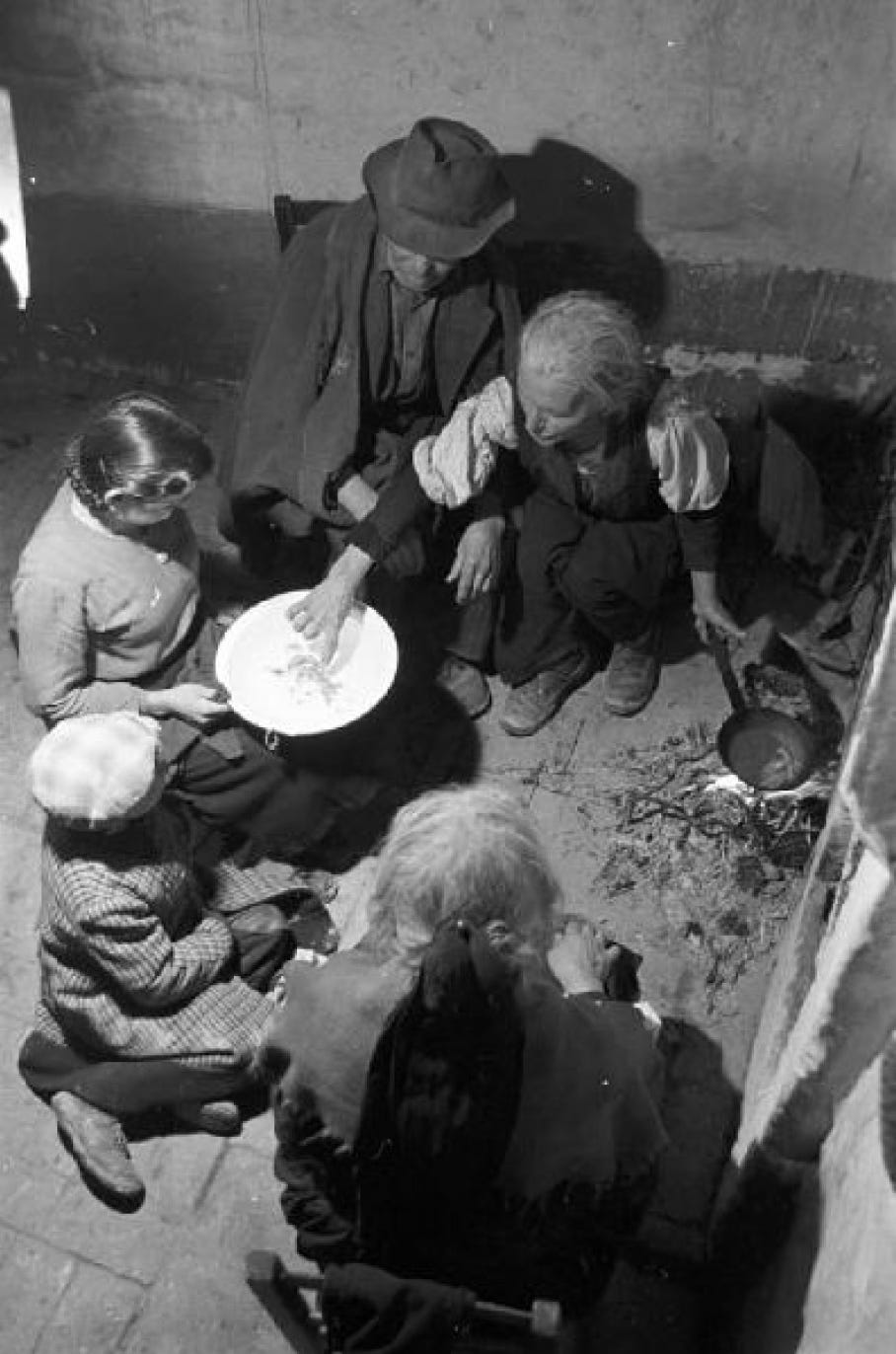
“Ci sono due storie: la storia dei dominatori e la storia dei dominati; quest’ultima non è scritta nei libri ma vive nelle tradizioni popolari.”
-Giuseppe Pitrè1
Translation:
“There are two histories: the history of the dominators and the history of the dominated; the latter is not written in books but lives in popular traditions.”
The popularity of so-called “Italian folk magic” seems to be ever increasing and it has brought up a lot of questions in regard to my own work and how I express and present it whether in my teaching, writing, or projects in general.
It took me years to consider whether or not I wanted to write a book about this topic and I finally did decide to after deeply contemplating many questions around “why?” I would do so. As an American of Italian descent I realized that my cultural context emerged amidst the milieu of Anglo dominated values, capitalism, colonization and so on. Why would I bring the traditions of my ancestors, many of which had been left behind in the “Old Country” into a realm that operates on a much different paradigm?
There are many reasons I went forward with the writing and it was not because I was certain of everything. I took a risk because of the potential benefits. The decision was finally made after listening to a podcast with Alexis Pauline Gumbs where she shared that she writes because it’s the way we have in this time to transmit information to the future generations who will need to know their histories and the medicines of their ancestors.
In her book “Undrowned” Gumbs writes:
“What do we need to remember that will push back against the forgetting encouraged by consumer culture and linear time? What can we remember that will surround us in oceans of history and potential? And how?”2
In writing something down, in that kind of remembering, there is something different than the traditional means of transmission which were largely oral, in person, in place and bound to communal agreements and social contracts that were lineages that carried the accumulation of collective knowledge through time.
For those of us disconnected and displaced, a written account of lost traditions will only take us so far, which is better than nothing, but not without pitfalls.
One of the aspects of life in the United States that I’ve come to terms with is that our lives are grown from the soil of colonized ground. This does not mean that it is all “bad” — not at all! Just that it’s part of our story, part of our history and will inform the future. And we cannot fully separate ourselves from it. We always have to look at where we are operating in that paradigm.
“It matters what stories tell stories, what thoughts think thoughts, what worlds world worlds.”
-Donna Haraway
Again, this is not to elicit guilt or shame (although those are appropriate emotions sometimes) but to discern and recognize where we are entangled with certain patterns and were we are perpetuated them (yes, sometimes we need to do so for survival).
What I have been seeing happen with Italian folk magic, for some time now, is its popularity has made it an industry for social media influencers, ancestral tourism, and otherwise. I know I am of an older generation (Genx) and that social media is some of how younger generations communicate and share knowledge.
I am also aware that traditions are meant to be adaptive and the idea that social media or fast travel or any other modern technology wouldn’t become part of the weave of tradition is not realistic. This is not about purity or extremism.
Yet, if what we actually want is to remember, then we have to at least acknowledge the difference between an orally transmitted prayer, spell, healing method vs. a video on Tik Tok (or insta or what-have-you) made by someone who has had little to know contact with Italian or even Italian American culture and yet is promoting themselves as a representative of that culture. And often, at that, sharing a sacred tradition that once had very specific social contracts around its transmission.
Not judging it or placing in a right/wrong category, just noticing — is this what we desire?
By social contracts, there were many and they weren’t written down or anything — they were lived and inherently known to those in the community. Once such contract is that traditions were taught by elders. Unfortunately this is one of the areas of social life that is missing in our society. Our elders are disregarded and have been for generations. And even when we do find true elders to learn from, our culture obsessed with youth and new, shiny things, does not revere them.
While Italian folk magic is not standardized, there are no “experts”, and it is meant to be adaptive, that does not mean it doesn’t have systems. For instance, the transmission of the cures for the malocchio (evil eye) is one aspect of Italian folk medicine that has very specific relational means of transmission. And those means have changed and adapted through time and is different in different places, but there are core elements such as how and to who it can be transmitted. This does make it “exclusive” and I would say even a closed practice.
According to tradition the cures of the malocchio can only be transmitted on certain dates from an elder to a younger person who the elder person has chosen — IN LIFE! Although there are instances in the historical records of living individuals receiving healing gifts from saints the cures of the malocchio are transmitted from one living individual to another, not from a dead relative to a living one. This is not to say this can never happen, anything is possible but our ancestors were clear on this.
In fact, there are many accounts where the healer HAD to pass it on to someone else before they died to keep it alive. And once they passed it on they then lost the power.
Now we can learn and know this and disregard it. But do so knowingly.
The rise of influence folk medicine is hard to see as beneficial to preserving folk traditions that were never intended for mass consumption and were part of the collective agreements of local peoples. I struggle to see this phenomenon as more than an expression of the continuity of consumerism and colonialism on platforms that reward engagement, likes, and views with social status and monetary reward. And no, I don’t mean people shouldn’t make a living, I do, we all have to.
But instead I mean to ask if our ancestral reclamation is elevating and regenerating our remembering of who we are and where we came from in a way that can be contextualized in service to where we are now as well as feeding the culture, people, and the traditions that we lost connection to.
This can certainly be messy and imperfect as well as fraught with mistakes, but as with any devotional practice, if what we center is attunement with the living tradition itself (including what we don’t like about that) we can begin to make choices about how we really want to go about things or not.
Our folkloric traditions from Southern Italy and the Italian enclaves of the US and elsewhere were the technologies of the peasants, of the oppressed, during a time when they were needed for survival. They may be needed again in the same way which is why it is so important that we remember them, and practice them. They are also truly healing and powerful which is why they were kept and transmitted in the ways they were and in many instance still are.
If we are going to bring something back it should be that — the personal, relational, and community oriented methods of creating rapport and care between people that was the true channel of medicine. The formula, the words, the objects used in Italian folk magic are the expressions of the webs of relations and the mutual aid amongst the members of a community, without that they lose potency.
From my view, how we can do that within the confines of our digital, technological landscape is the work that is now in our hands.
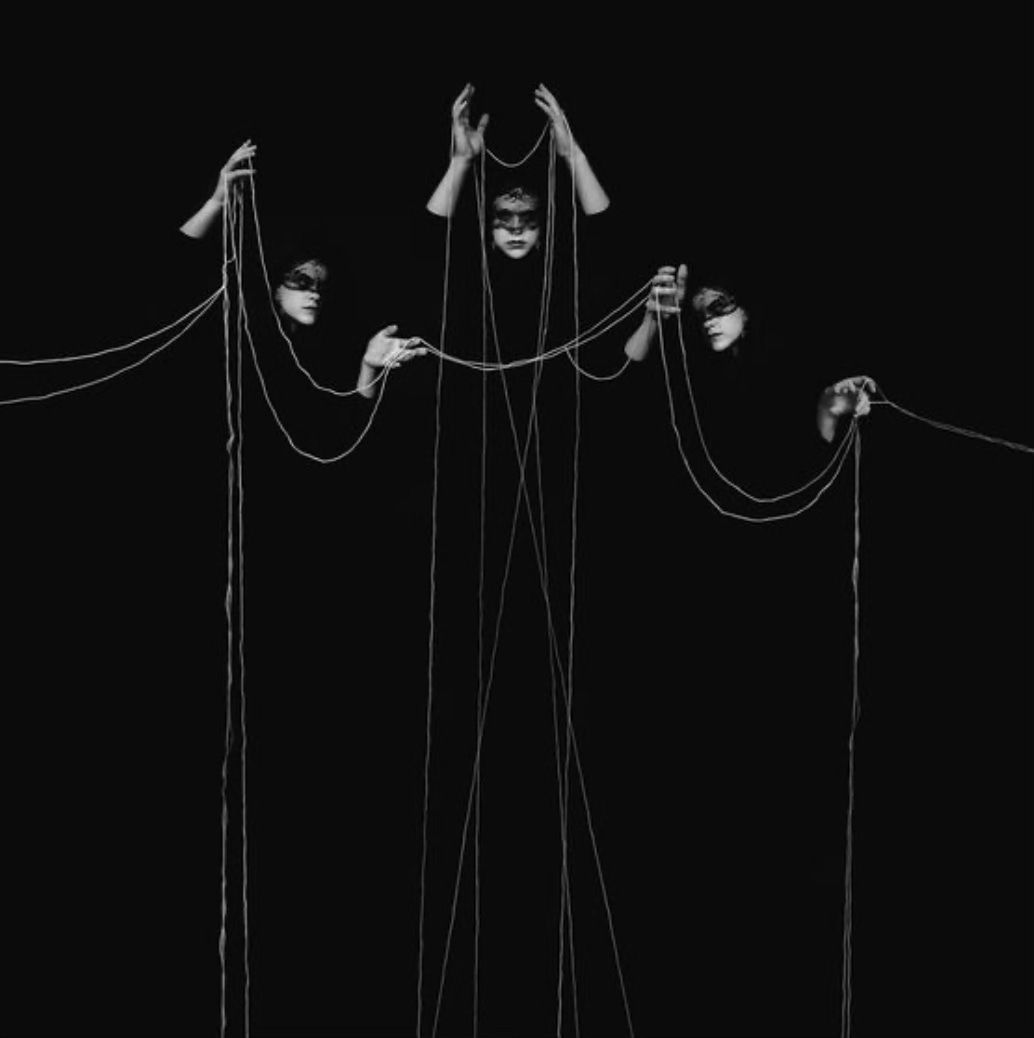
In the words of Donna Haraway, American professor emerita in the history of consciousness and feminist studies, where she compares the metaphor of string figure games, whereby a string pattern is passed from one person to another. Each has to keep the pattern before intact enough to create something new from it. She refers to the words of Belgian philosopher and chemist Isabelle Stenger:
”What is it to hold still enough in a string figure game so that the pattern can be taken up and altered and passed on…and like it or not then, the pattern is in one’s hands.”3
The pattern is in our hands, now what are we going to do with it?
Giuseppe Pitrè, Biblioteca delle tradizioni popolari siciliane, cited in Ernesto de Martino, Land of Remorse
Gumbs, Alexis Pauline. Undrowned: Black Feminist Lessons from Marine Mammals. AK Press, 2020, p. 29
Donna Haraway, “SF: String Figures, Multispecies Muddles, Staying with the Trouble,” lecture delivered at the University of Alberta, March 24, 2014, YouTube video, June 27, 2014,
The quote and image of the string figure game really grounds what you write about (and teach) - the value and necessity of the relational and communal for transmission of the traditional and sacred - even when used as a template to build upon. So tangible, very hands on, oral, and once the technique is there I can create a new pattern or any sort of useful or beautiful thing. I love this!